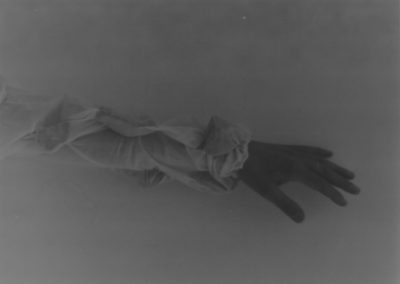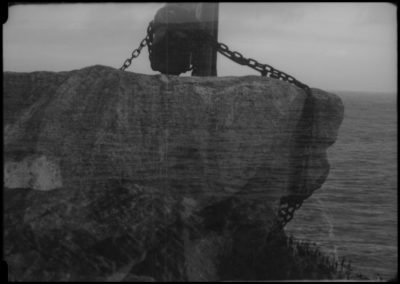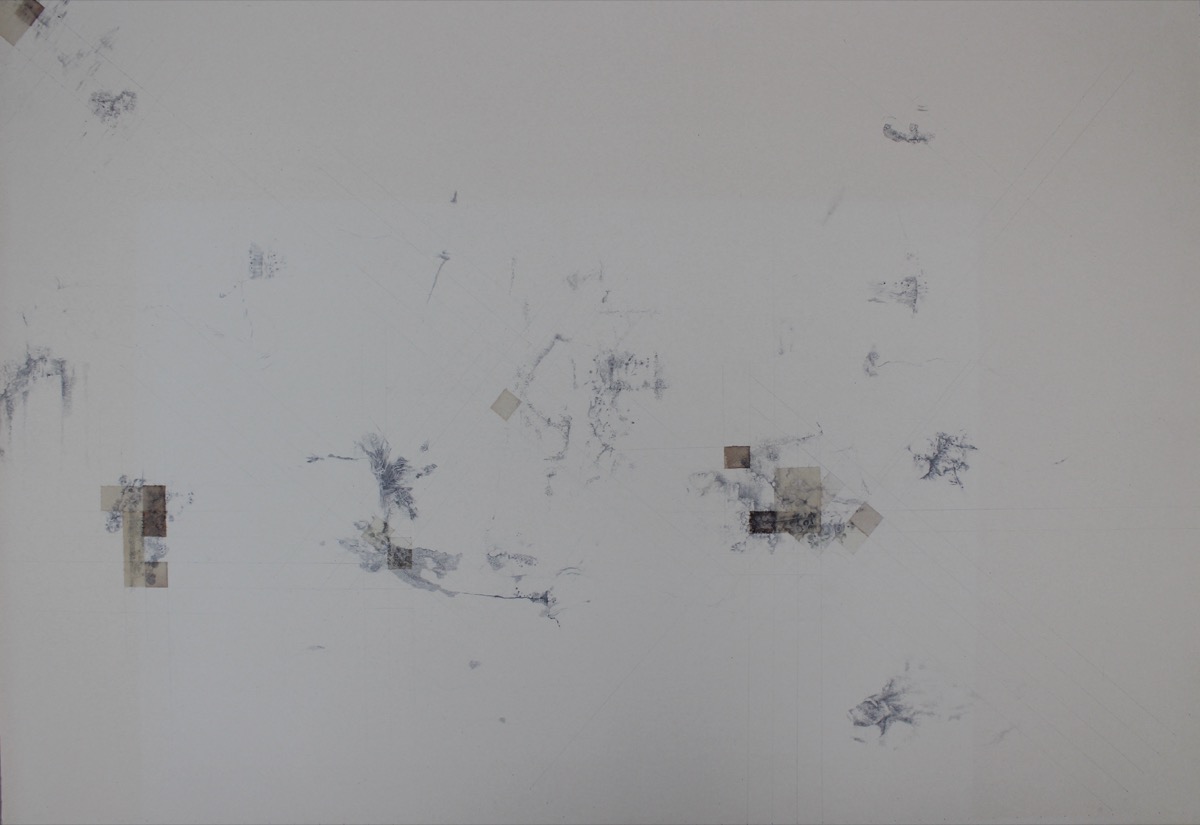
Even Deeper (2025),
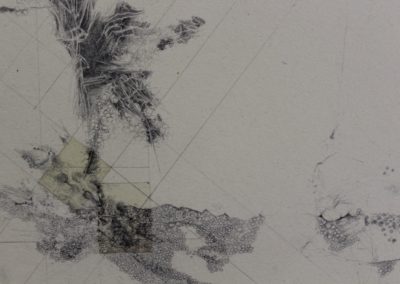
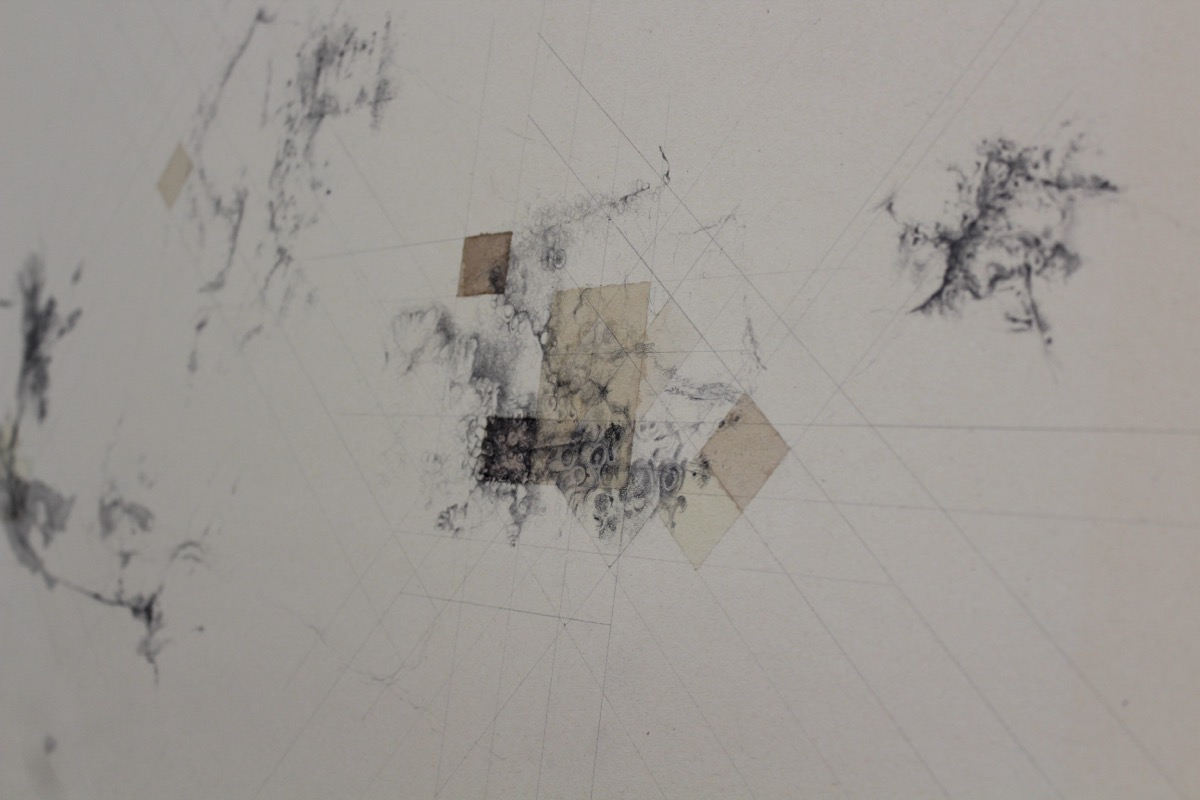
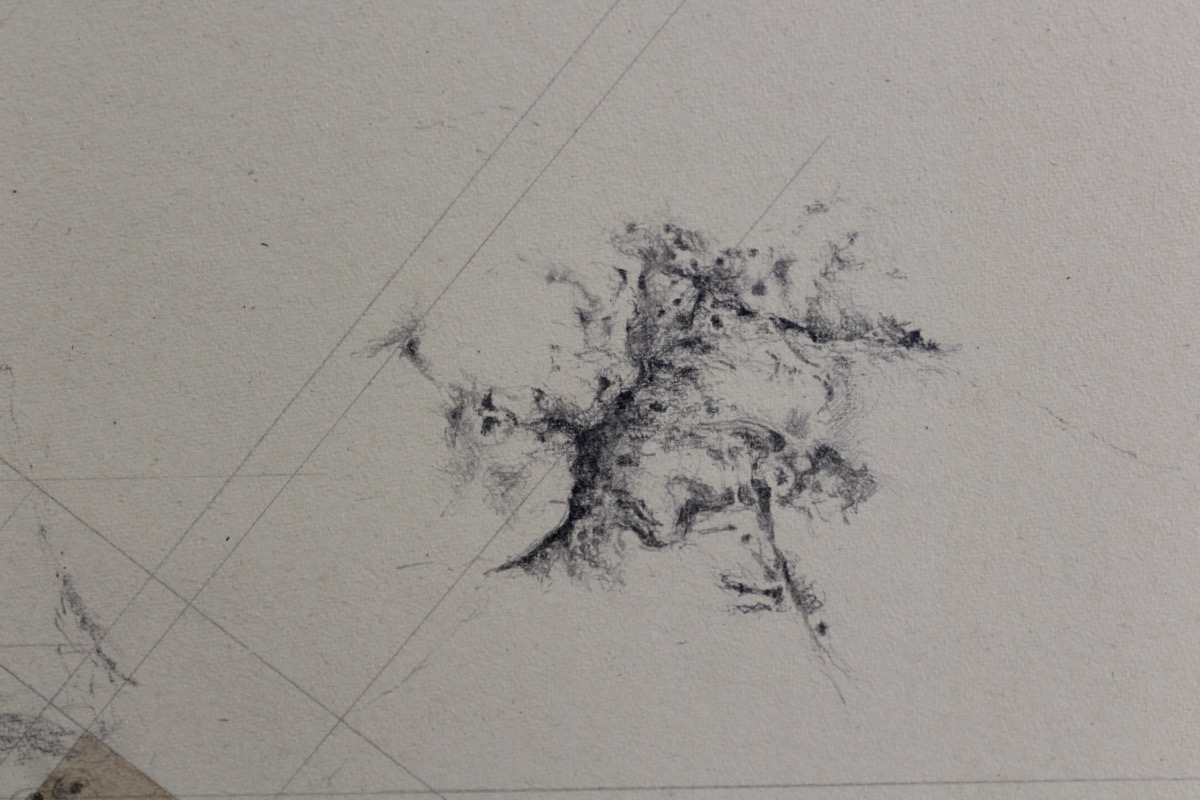
Even Deeper (2025), drawing on card, pencil, rosemary developer, 112cm x 81cm
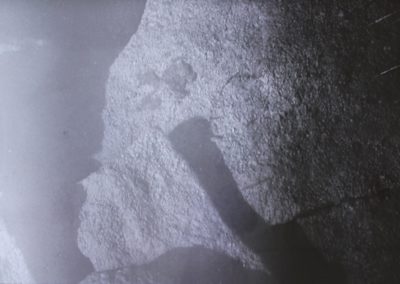
Zooming into digital photographs of Cotswold stone fragments, my gaze touches the surface of the strata that has been repaired (Made of Echo / Indeterminate Emergence).
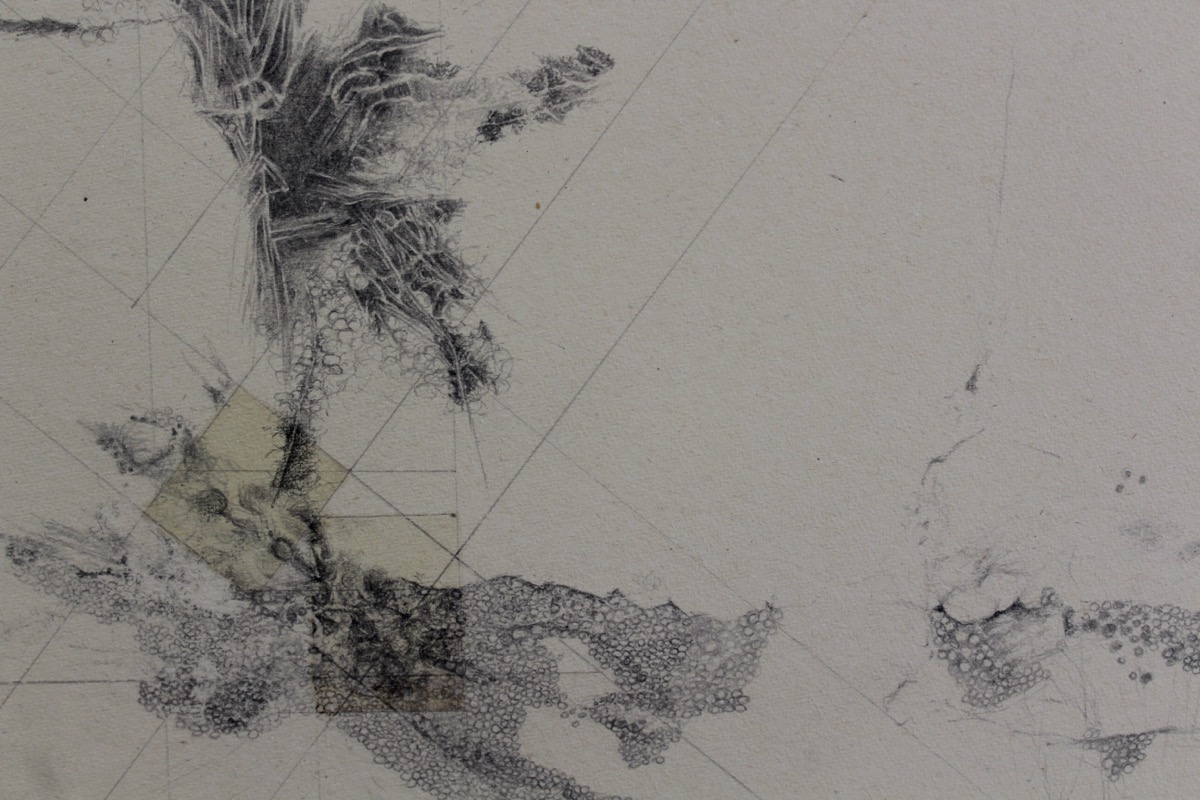
Taking my pencil to paper, I record observations of this visual information. Imaging the movement of particles millions of years ago as marks, void of any particular scale, build up.
Like a map, the faint grid lines give a structure for the drawn mineral fragments.
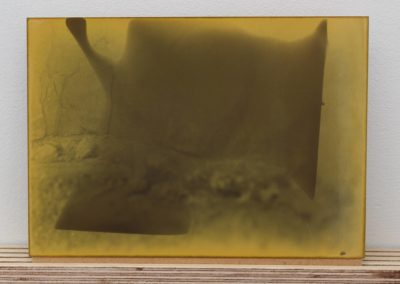
I connect this drawing with the photographic processes by using plant developer as paint.
Depending on the contact it has with light, the colour of the applied developer changes.
This observational drawing of sorts is fragmented yet woven into active material processes that consider and aim to challenge the inanimate attribution that strata firmly holds.
Research
I hope to activate a moment of surprise, a pausing, being unsettled, whilst turning ourselves deeply toward awkward strata. Its transparency allows the viewer to penetrate through the surface into the depth of limestone granules in either a disciplined or an intuitive way, thus experiencing a life force (Train, 2013) [1] .
Through the abstraction, fragmentation and disorientation in scale, it might be difficult to associate these drawings with mineral materiality. Therefore, a different way of observing and discovery is required.
With our eyes close to fragmented visual detail and perhaps unsure what we are looking at, we can make space for ‘a mood with ethical potential’ (Bennett, 2001) [2] .
With my drawing, I am observing and placing geological details onto paper like a surveyor trying to find a place for these fragments of strata, whilst imagining and listening to their old winding stories. The drawing process allows me to make sense of the activated cacophony of being in place.
The layers in my drawing create a memory and familiarity with strata, inviting the viewer to engage differently with the stories of rock and re-imagine ethical questions as we sense and reflect on geological processes (Clark, 2017) [3] .
What if strata is active and can be activated through reflecting on these processes? What if we can sense strata with our body? (Alaimo, 2010) [4].
Visual Literature Research
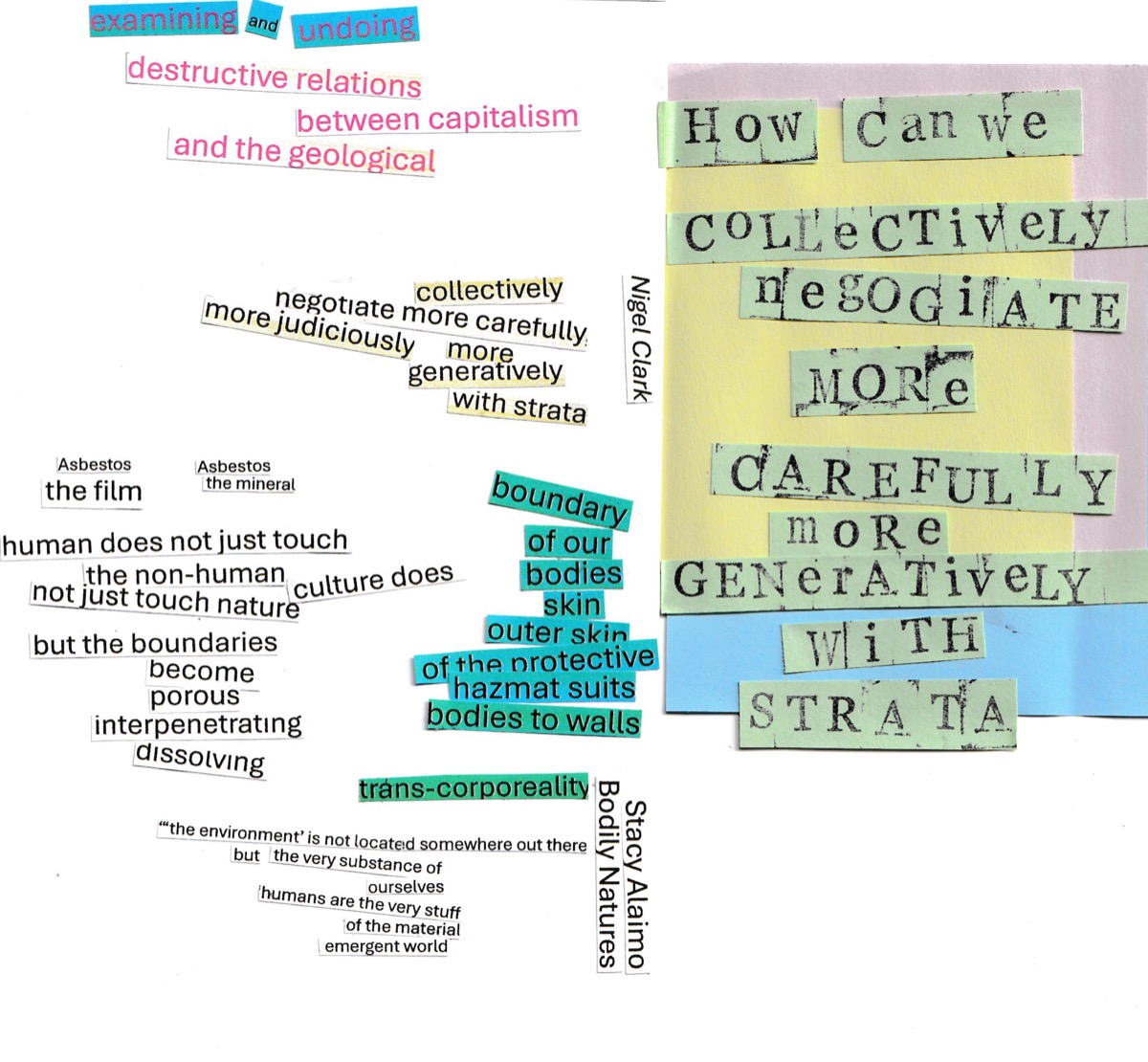
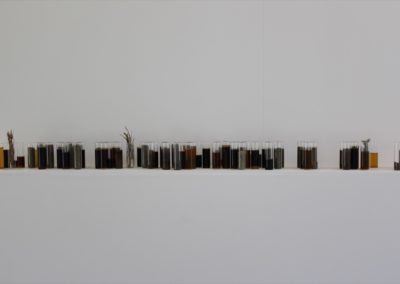
Visual literature research strips, Litvintseva / Clark 2021
References
- Train, (2013) Mira Schendel and Vilem Flusser in Dialogue
- Bennett, J. (2001) The Enchantment of Modern Life: Attachments, Crossings and Ethics, Woodstock: Princeton University Press.
- Clark, N. (2017) Politics of Strata: Theory, Culture & Society 34.2–3 (2017): 211– 231
- Alaimo, S. (2010) Bodily natures : science, environment, and the material self. Bloomington: Indiana University Press.