Hazmat Rock Suit (2025),
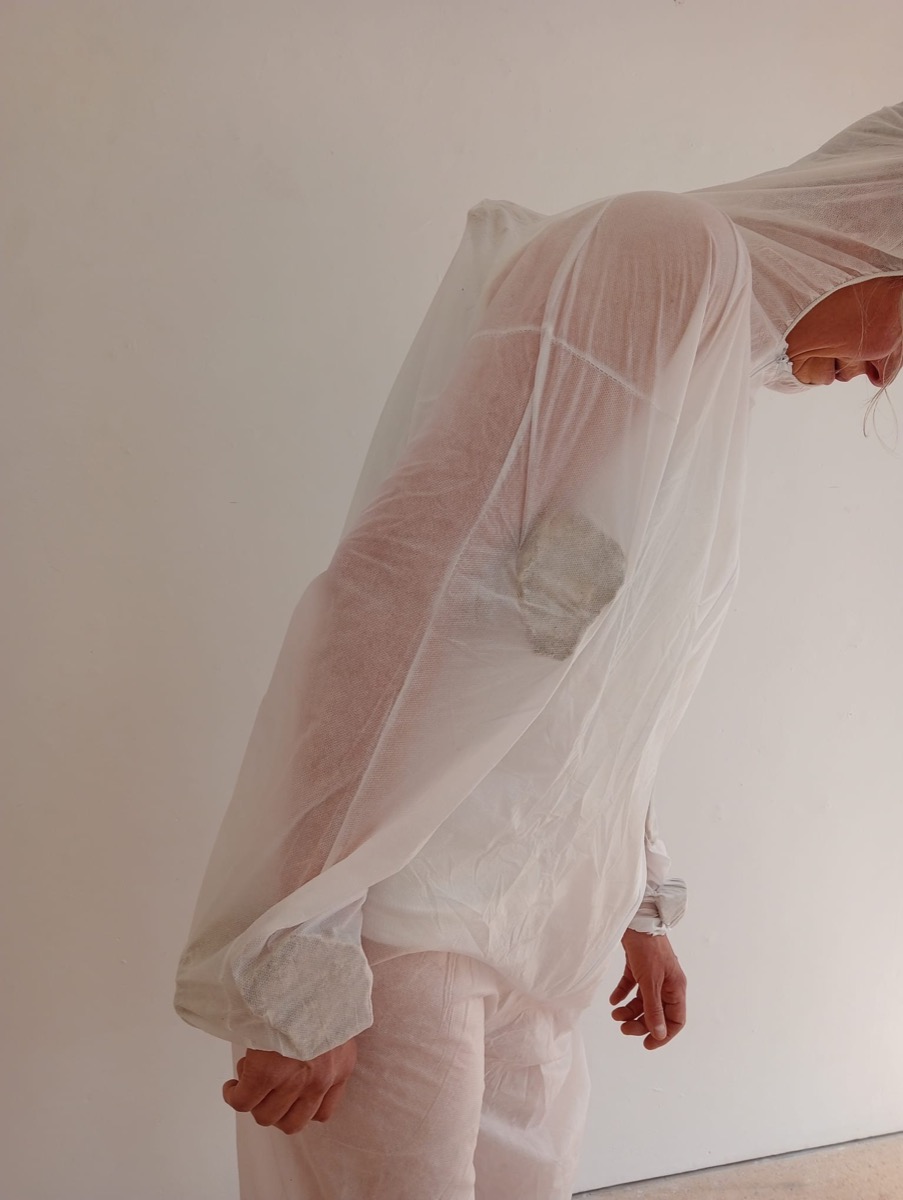
Image of me wearing a hazmat suit
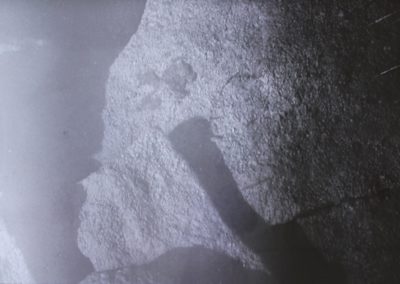
This is me wearing a hazmat suit. The rocks inside the suit push their rough surface onto my skin as the flimsy fabric tightens. I move my arm through the sleeve of the hazmat suit, strata scratching my skin. What happens when I put my body in direct contact with the cold, hard, heavy qualities of this materiality?
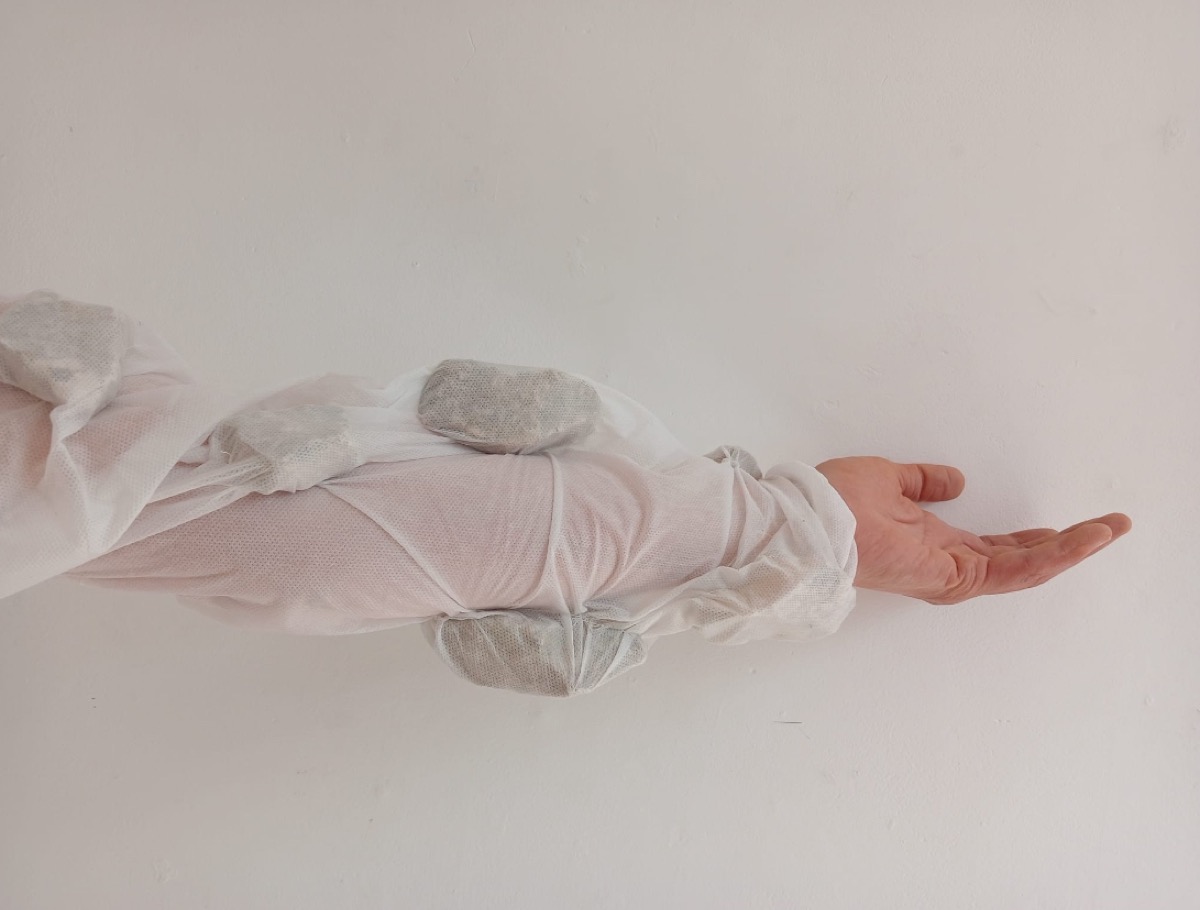
Hazmat Rock Suit, arm detail (2025)
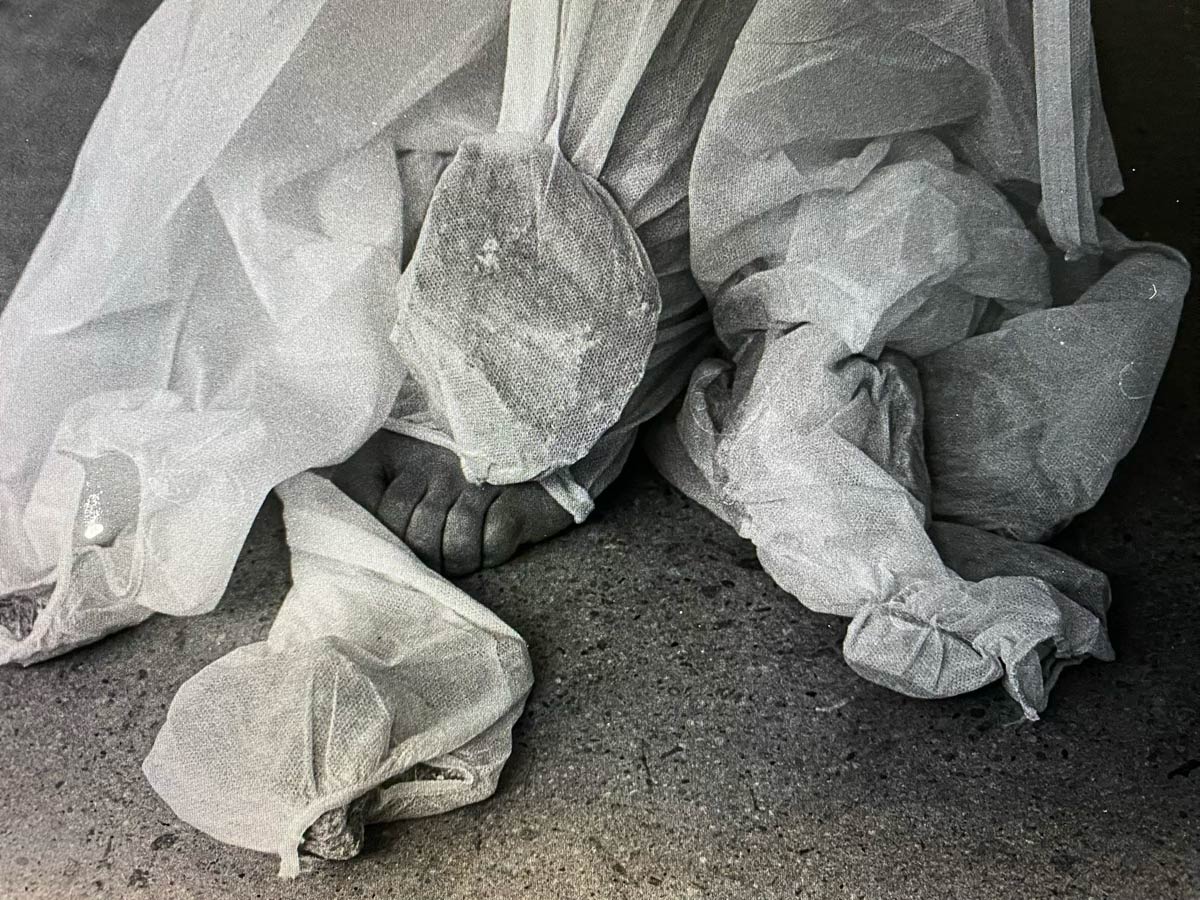
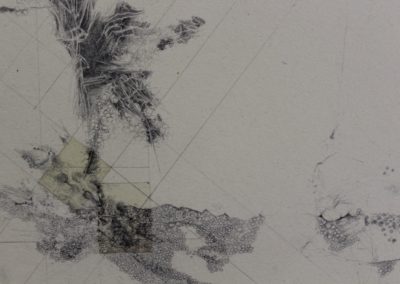
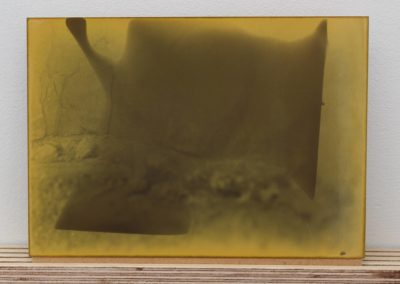
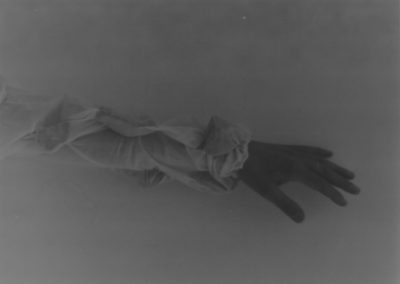
Hazmat Rock Suit Hand (2025), silver gelatine print 25.5cm x 20.5cm
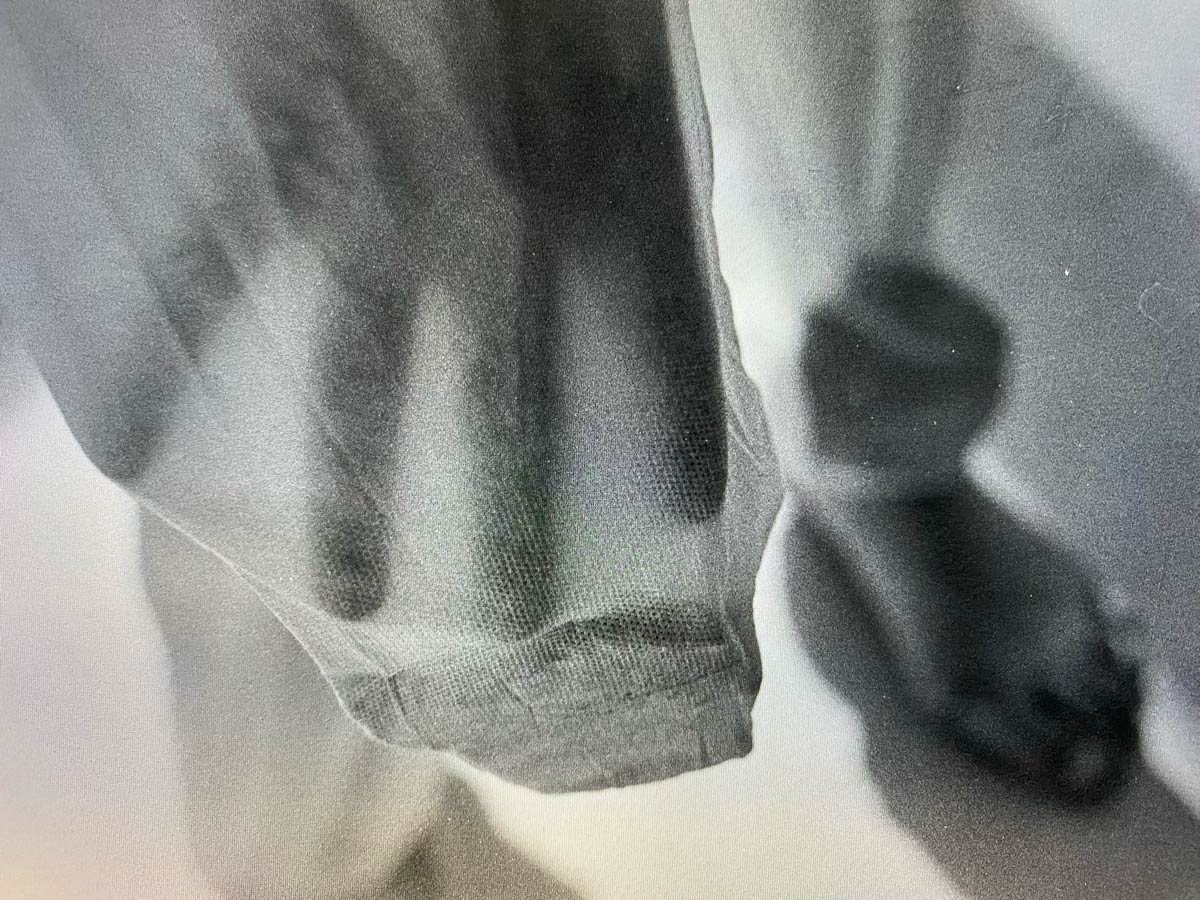
Hazmat Rock Suit Hand (2025), silver gelatine print 25.5cm x 20.5cm
Research
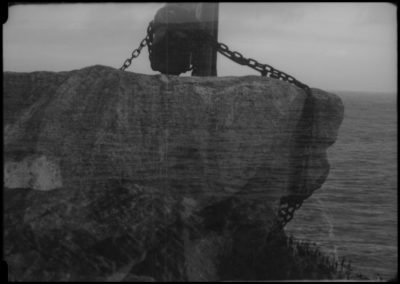
My performances are often collaborative, the audience is primarily the site of gritty terrain or as in this work, the strata itself. Directing my research into somatic practices, I developed the performance ‘Hazmat Rock Suit’. I isolated the material from its matrix and brought it into close contact with my body.
Performance practitioner Brenda Waite suggests that the touching of a rock can filter through our body, starting from the skin, through the fat, muscle, and bone like osmosis, all the way through to our memory.
Abrams (Inayatiyya, 2021) [1] draws attention to the direct sensory experience of place, stating that everything within place is animate. He acknowledges that some things move a lot slower than others, like the ground underfoot and the rocks and the hills, and yet they still move.
Therefore, his interpretation of the sensory within place and its materiality is directly relevant to the performative aspect of my practice.
Similarly, Abrams [1] invites us to recognise that our senses grant us immediate access to the more-than-human. To value our sensory experience is essential to align ourselves with the larger ecology of the earth.
Rufo & Gallo (2024) [2] name this sensory space between human and the more-than human as a threshold in which playful vitality, contemplation of the body, and the becoming of action constitute a fabric of connectivity between sensory experience of the individual and a felt sense of environment.
Viewing somatic engagement as an ecological observatory, new vitality can be brought to the relationship between word and silence, doing and not doing, presence and absence.
Akomolafe (For the Wild, 2025) [3] suggests that to know, fugitively, is to come alive to other senses . To navigate the world differently. Through proprioception, we position our muscles, and the way we move and situate ourselves in space time. Thus ‘knowledge is how we meet the world and how the world meets us in return‘.
References
- Inayatiyya (2021) David Abrams on the Animate Earth & Becoming Animal
- Rufo, R. & Gallo, F. (2024) ‘Reclaiming the Metamorphic Imagination: Ecosomatic Practice and the Poetics of Myth in the Age of Ecological Disaster’ Research Gate.
- For the Wild, (2025) Bayo Akomolafe ‘On coming alive to other sense‘