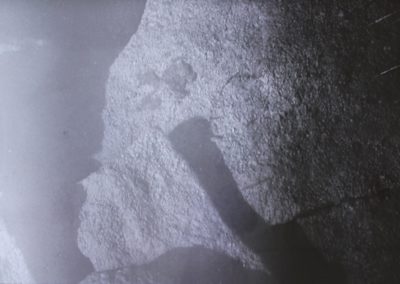
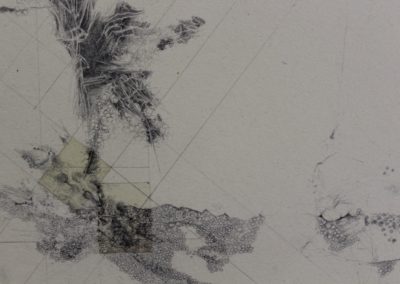
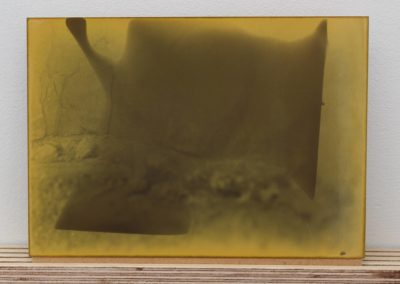
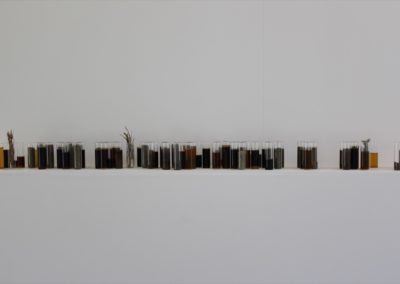
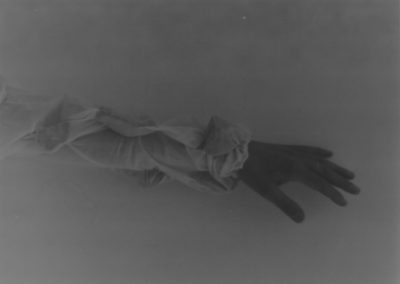
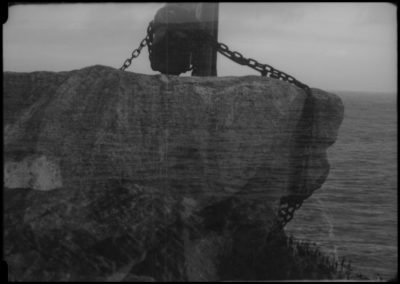
Made of Echo (2025), 16mm film,10 mins
filmed with a Bolex on 16mm film stock ISO 12, hand processed in caffenol
About this film
I noticed someone repairing a local stone wall.
This care for materiality within a location close to my home prompted me to join in by observing, paying attention, and archiving visible traces of repair on 16 mm film. Holding the Bolex to my chest, my body became a sensing loupe lens, moving its gaze over a gritty story.
Pressing the trigger of the Bolex the photochemical film inside the camera holds on to and memorises the light of the moment of capture.
Neighbours and passers by watched me filming, this sparked conversations about this grainy matter, where it was extracted and speculations about the age of this wall.
Working with photochemical film and moving image
Materialist filmmaking, the hand processing of celluloid film, can be viewed as a nostalgic practice of working with an obsolete medium. Emerging small artist’s film collectives working with celluloid film analyse and experiment with the material specificities. Through the focus on process and materiality, materialist filmmaking is situated in the broader field of material reflection (Knowles, 2020) [1].
Therefore, I see materialist filmmaking as an opportunity to situate my process and material-based practice within. Through its materiality and the process of hand development, it holds the potential to investigate the processes of rocks within a specific site as well as the similarities of the celluloid emulsion (Litvintseva, 2022)[2] and the surface microcosm and lichen communities on rocks (Schuppli, 2021)[3]. Another side of analogue filmmaking is that it is a communal practice where artists work together through embodied inventive methods, imagining slowing futures. I was introduced to BEEF, an artist film collective, last year, and I immediately felt this sense of communal endeavour, support and critical discourse present in the group of filmmakers. (Knowles, 2020) argues that the specificity of a medium is not only an issue of materials and what they represent.
A photochemical film practice today can be understood through its materiality in the context of the ‘material turn’ taking place across the social sciences as we try and find new ways in a world ruled by consumerism and increasingly invasive marketing campaigns for new products. I argue that reaching back to the obsolete, bringing it into our times, re-imagining this slow medium is a statement of resistance and collective imagination.
Filming with a Bolex is a physical, uncertain experience which begins with the loading of the film in the darkroom and ends when the developed film comes out of the developing tank. Guided by the structure and timing, the process needs, and through being in the dark, intuition and imagination unfold through a slowing, eventually revealing manifested light on the celluloid surface. Dean shares another aspect of filmmaking (acca melbourne, 2013) [4] the process of a shifting memory due to the times in between capturing the footage and viewing the developed film; she describes it as a mercurial element, a travelling of a journey that we have been on and that prevents us from seeing what we might imagine.
Visual Literature Research
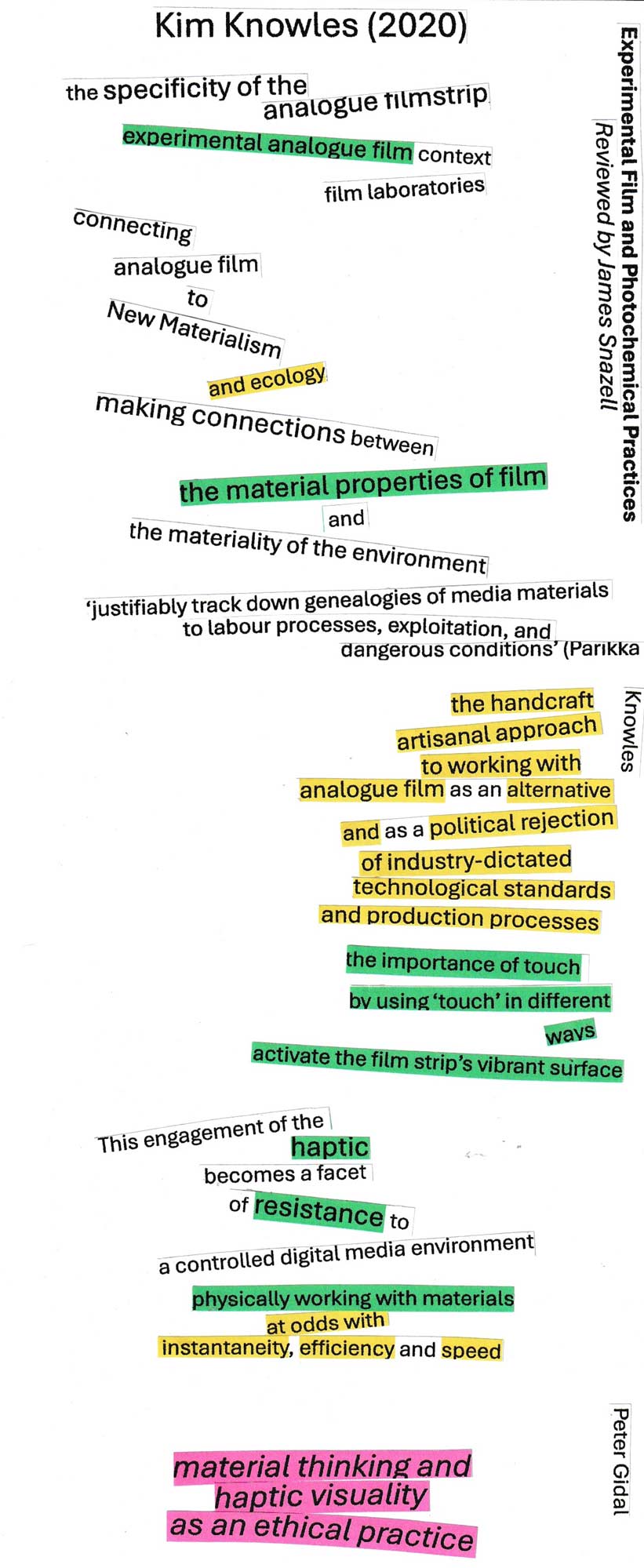
Kim Knowles 2020
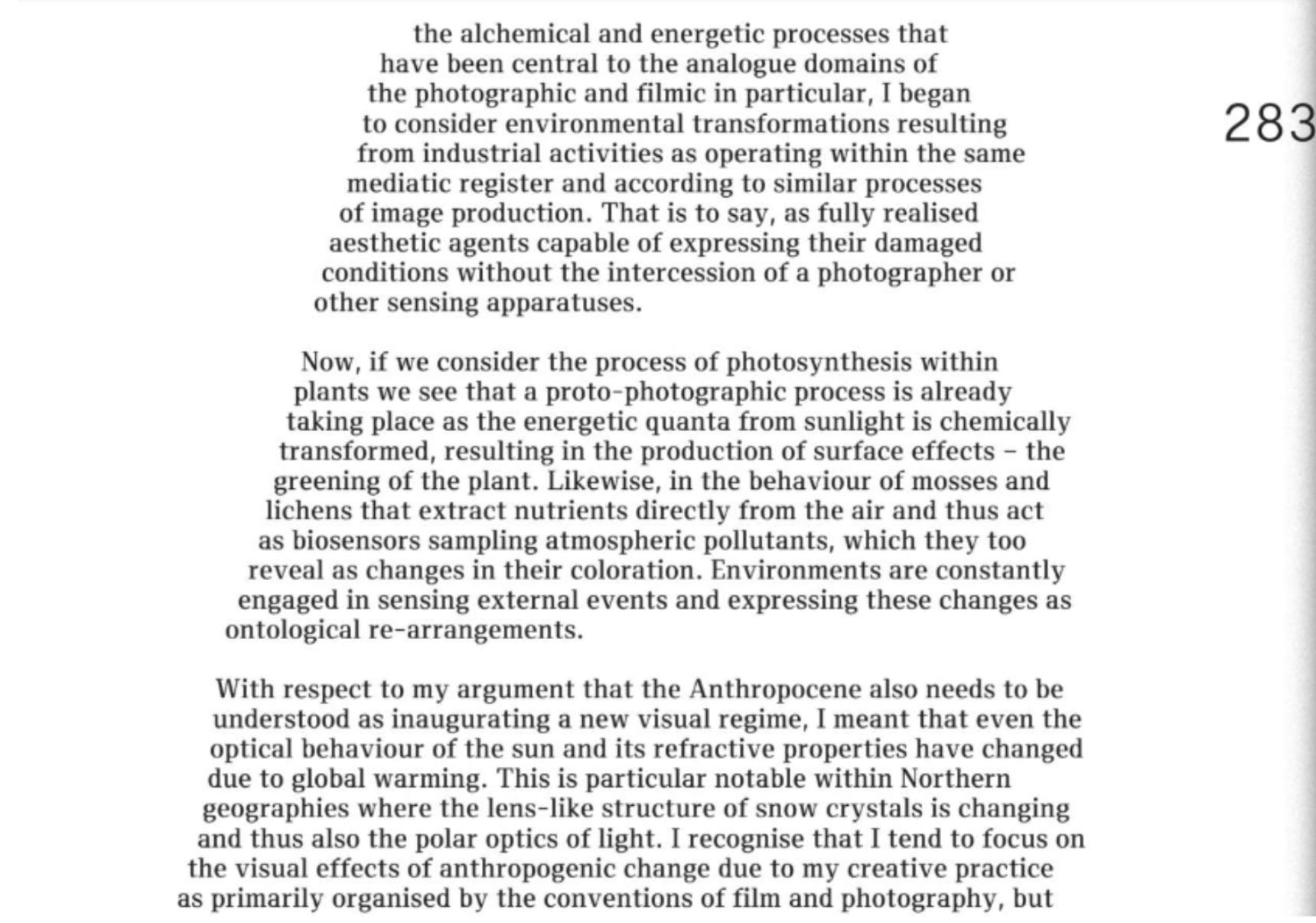
Susan Schuppli 2021
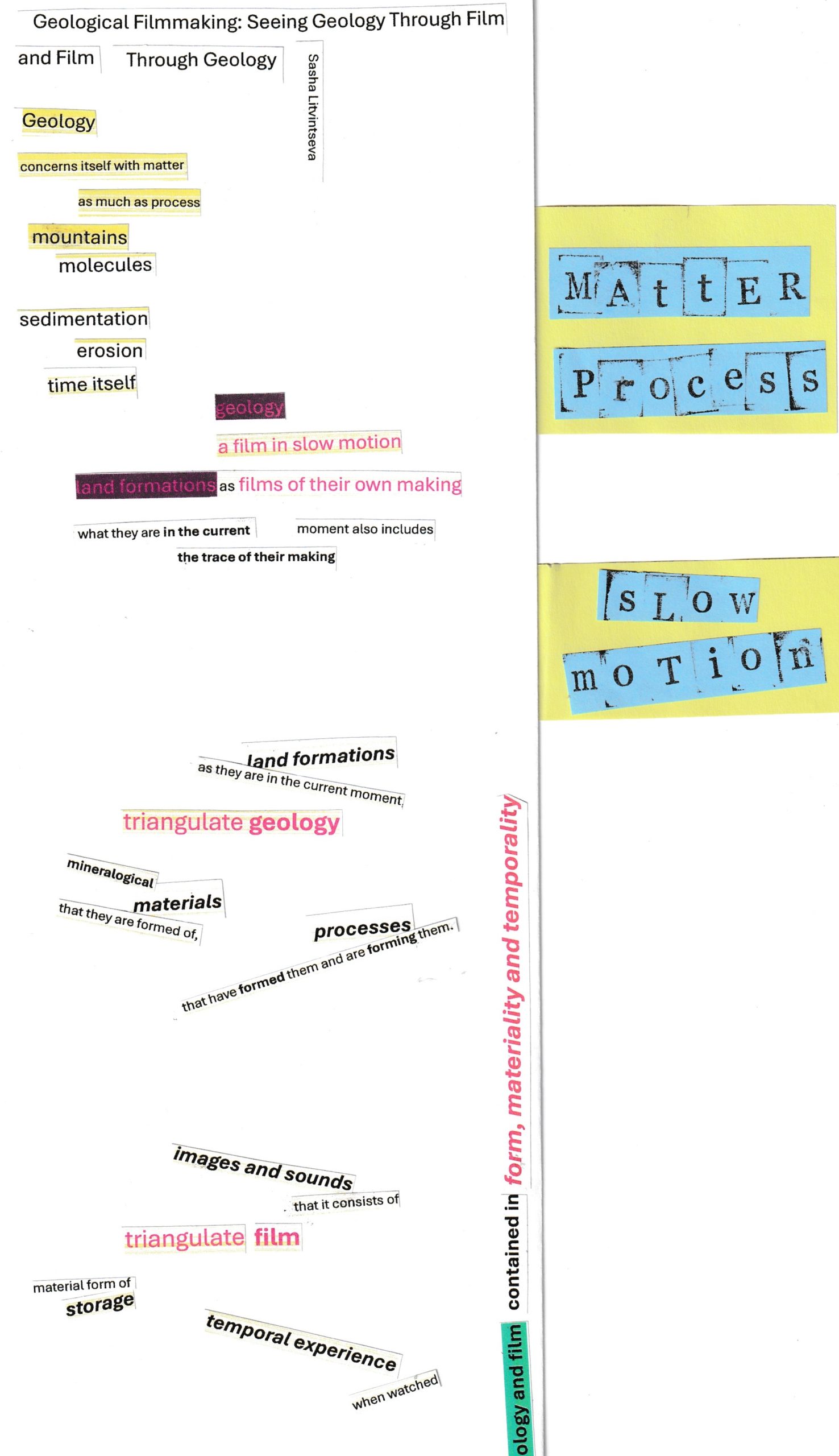
Sasha Litvintseva 2021
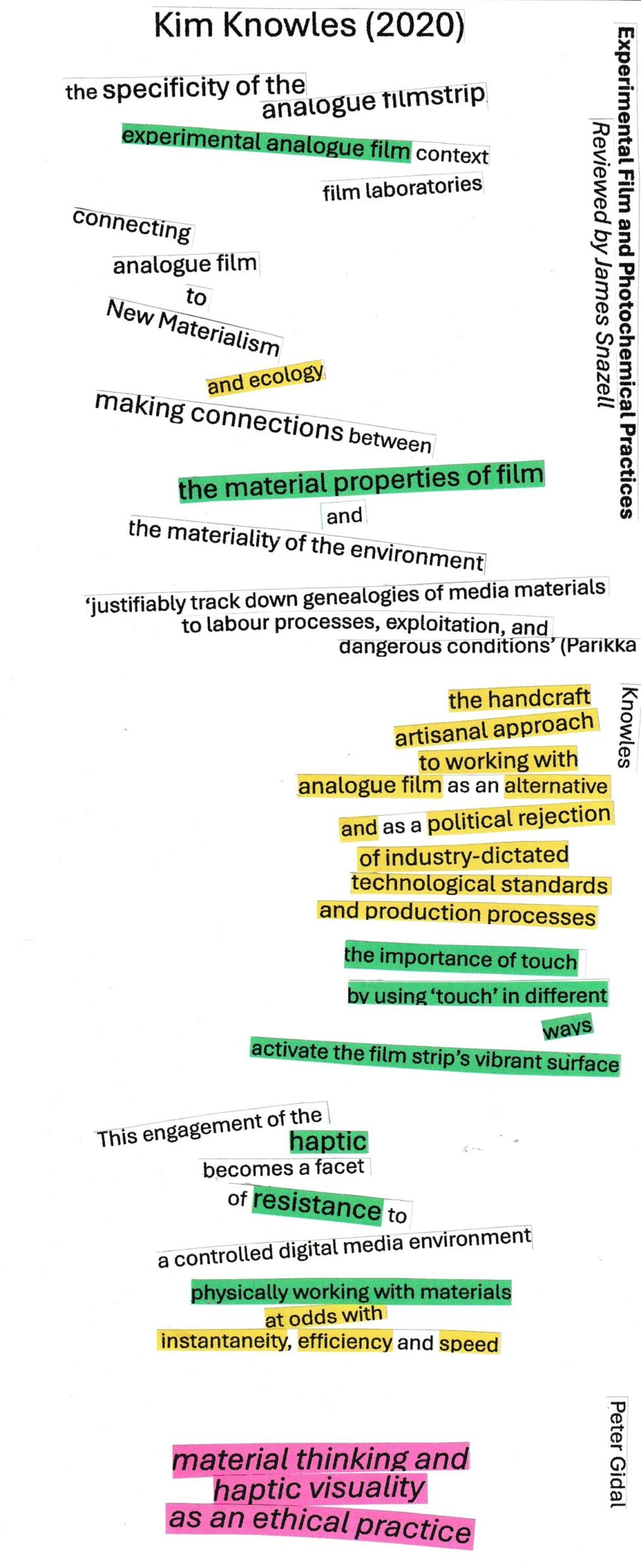
Kim Knowles 2020
References
- Knowles, K. (2020) Experimental Film and Photochemical Practices. Cham: Palgrave Macmillan.
- Department of Visual Cultures, Goldsmiths (2021). Susan Schuppli, Material Witness. [Online video] (Accessed: November 2025).
- Litvintseva, S. (2022) Geological filmmaking, London: Open Humanities Press
- acca melbourne. (2013). Tacita Dean, on Film. Interview at ACCA 2013. [Online video]. (Accessed: 11.11.2025).